Blog

  • STRYDE expands Indonesian footprint with 12,000-node PT SUCOFINDO deployment

    STRYDE expands Indonesian footprint with 12,000-node PT SUCOFINDO deployment

    STRYDE, a seismic technology company specializing in lightweight nodal systems, has expanded its presence in Indonesia with a new deployment of 12,000 nodes in partnership with PT SUCOFINDO, a leading Indonesian inspection and testing services provider. The deployment marks one of the largest nodal surveys in the region and reinforces the shift toward dense, high-resolution seismic acquisition in Southeast Asia’s oil and gas exploration sector.

    STRYDE’s nodal technology is designed for demanding environments, offering a compact and battery-efficient solution that reduces the surface footprint compared to traditional cable-based systems. The system allows operators to acquire dense seismic data sets while significantly cutting equipment, crew, and logistics requirements. According to STRYDE, the track record built through earlier successful deployments in Indonesia has been key to driving wider adoption among contractors and operators who have seen the technology perform in local jungle and swamp conditions.

    Indonesia remains a focal point for oil and gas exploration, particularly in basins such as Kutei and North Sumatra, where recent discoveries have spurred renewed seismic activity. The ability to deploy thousands of nodes rapidly and cost-effectively is increasingly critical as operators seek to de-risk prospects and improve imaging in geologically complex areas. PT SUCOFINDO’s involvement brings local expertise in data quality assurance and operational support, ensuring the survey meets industry standards.

    The expansion comes as Southeast Asian national oil companies and international players ramp up exploration spending to counter declining production from mature fields. Nodal seismic technology offers a competitive edge by enabling higher fold data and better subsurface illumination, which can lead to more accurate reservoir characterization and reduced drilling risk. The STRYDE-PT SUCOFINDO partnership demonstrates how technology collaborations can strengthen local supply chains while bringing advanced exploration tools to the region.

    Looking ahead, the success of this deployment could accelerate further adoption of nodal systems across Indonesia and neighboring countries such as Myanmar, Malaysia, and Vietnam where similar operational challenges exist. STRYDE is also exploring integration with machine learning workflows for faster data processing and interpretation. As exploration budgets remain under pressure, technologies that lower cost per square kilometer while improving data quality are likely to see continued demand in Southeast Asia’s upstream sector.

    Key entities: STRYDE, PT SUCOFINDO, Indonesia, seismic nodes

    Source: energy-pedia.com · 2026-09-23 · https://www.energy-pedia.com/news/indonesia/stryde-expands-indonesian-footprint-with-12-000-node-pt-sucofindo-deployment-205402


  • Overseas markets key to growing Malaysia’s oil and gas services sector in next three years, says economy minister

    Overseas markets key to growing Malaysia’s oil and gas services sector in next three years, says economy minister

    Malaysia’s economy minister, Datuk Seri Mohamad Hasan, emphasized that overseas markets will be crucial for the growth of the country’s oil and gas services sector over the next three years. Speaking at an industry event, he noted that Malaysian companies must look beyond domestic borders to secure new contracts and enhance their technological capabilities.

    The minister highlighted that the global energy transition and increasing demand for oil and gas in emerging markets present significant opportunities for Malaysian service providers. By tapping into international projects, these firms can acquire cutting-edge technologies and improve their competitiveness in areas such as drilling, completions, and subsea engineering.

    Malaysia’s oil and gas services sector has long been a cornerstone of the national economy, with companies like Sapura Energy and Bumi Armada gaining recognition worldwide. However, the domestic market is mature, and growth potential lies abroad. The minister’s remarks come at a time when Southeast Asia is seeing increased upstream activity, particularly in Malaysia and Vietnam.

    The government is expected to support the sector through trade missions, financing schemes, and partnerships with foreign operators. This strategic push aligns with Malaysia’s goal of becoming a regional hub for oil and gas services and technology. The minister called on industry players to collaborate and share best practices to strengthen their global footprint.

    Looking ahead, the success of this overseas expansion will depend on factors such as geopolitical stability, oil prices, and the ability of Malaysian companies to innovate and adapt to new technologies. The minister expressed confidence that with the right strategy, the sector can achieve sustainable growth and contribute significantly to the nation’s economy.

    Key entities: Malaysia, Economy Minister Mohamad Hasan, oil and gas services sector, Southeast Asia

    Source: malaymail.com · 2026-09-23 · https://www.malaymail.com/news/malaysia/2026/09/23/overseas-markets-key-to-growing-malaysias-oil-and-gas-services-sector-in-next-three-years-says-economy-minister/236216

  • Perenco launches Brazil’s first offshore electrification project

    Perenco launches Brazil’s first offshore electrification project

    Perenco, the independent oil and gas company, has announced the launch of Brazil’s first offshore electrification project, in partnership with Port of Acu. The project will be deployed at the PPG-1 fixed production platform, located in the shallow-water Pargo field within the Campos basin. By connecting the platform to an onshore power supply, the initiative is expected to significantly reduce greenhouse gas emissions generated by conventional offshore power generation.

    The PPG-1 platform was originally operated by Petrobras, but is now part of Perenco’s portfolio following an asset acquisition. This electrification project involves installing subsea cables and related infrastructure to transmit electricity from the Port of Acu’s existing power grid to the platform. Once completed, the platform will be able to shut down its gas turbines used for power generation, leading to a major cut in operational carbon dioxide and methane emissions.

    Fabio Palmigiani, South America Correspondent for Upstream, reported that this is the first offshore electrification project in Brazil. The move aligns with the global oil and gas industry’s growing focus on decarbonisation, especially in offshore operations. Brazil, as a major offshore producer in deep and shallow waters, has been under pressure to address its carbon footprint. Perenco’s initiative could serve as a blueprint for other operators in the region, potentially prompting more investment in offshore electrification along the Brazilian coast.

    Offshore electrification is a proven technology for lowering emissions from oil and gas production facilities. Platforms traditionally rely on natural gas turbines to generate electricity, which produce significant CO2 and other pollutants. By switching to power from onshore grids — which can include renewable sources such as wind and solar — operators can achieve substantial reductions in their upstream carbon intensity. The project also reduces operational costs over the long term by decreasing fuel gas consumption and maintenance requirements for turbines.

    The partnership between Perenco and Port of Acu is notable because the port is already a major industrial hub for oil and gas support activities. Port of Acu has been positioning itself as a centre for offshore energy logistics, and this electrification project enhances its role in the energy transition. The Campos basin, where the PPG-1 platform is located, is one of Brazil’s most mature offshore basins, with numerous legacy platforms. If successful, this project could encourage other operators in Campos and elsewhere to pursue similar electrification, accelerating the decarbonisation of Brazil’s offshore sector.

    Looking ahead, Perenco is expected to provide details on the project timeline, cost, and expected emission reductions. The company has not yet disclosed the specific power capacity or the length of the subsea cable. However, the launch of Brazil’s first offshore electrification project marks a significant milestone for the country’s upstream industry. It demonstrates that smaller independent operators can drive innovation in decarbonisation, often more quickly than major multinationals. The industry will be watching closely to see how this project performs, as its success could unlock broader adoption of offshore electrification technology in Brazil and other Latin American basins.

    Key entities: Perenco, Port of Acu, Campos basin, PPG-1 platform, Pargo field, offshore electrification, Brazil

    Source: upstreamonline.com · 2026-09-23 · https://www.upstreamonline.com/production/perenco-launches-brazil-s-first-offshore-electrification-project/2-1-2048219

  • Upstream players seek closer Petronas ties amid uncertainties

    Upstream players seek closer Petronas ties amid uncertainties

    Upstream oil and gas players in Malaysia are intensifying efforts to strengthen ties with Petronas amid a backdrop of global market volatility and operational challenges. A recent engagement organized by the Malaysian International Chamber of Commerce and Industry (MICCI) Petroleum Production Sharing Contractors (PPSC) forum brought together senior representatives from production sharing contractors and industry stakeholders to discuss pressing issues facing the sector. The dialogue centered on how closer partnerships with Petronas can help contractors adopt advanced technologies and improve project economics.

    Key topics included the deployment of digital twin solutions for reservoir management, automated drilling systems, and enhanced oil recovery techniques tailored for mature Malaysian fields. Contractors emphasized the importance of technology transfer and local capability building, which are essential for sustaining production levels in the country’s aging offshore assets. Petronas, for its part, reaffirmed its commitment to supporting PSCs through flexible contract terms and shared investment in pilot projects.

    The meeting also addressed the impact of recent global supply chain disruptions on drilling and completion activities in Malaysia. Several contractors reported delays in the delivery of critical equipment, which have led to cost overruns and schedule slippages. The industry called for a more collaborative approach to procurement and logistics, leveraging Petronas’s scale to secure better pricing and availability of essential items such as subsea trees and high-pressure flowlines.

    Another area of focus was the integration of artificial intelligence and machine learning in production optimization. Contractors shared case studies where ML algorithms improved production forecasting accuracy by up to 15%, reducing unplanned downtime and extending field life. Petronas highlighted its ongoing collaboration with local universities and technology startups to develop homegrown AI solutions, aligning with the government’s push for digital transformation in the energy sector.

    The forum also touched on regulatory and environmental considerations. With stricter emissions targets, PSC operators are under pressure to reduce methane leaks and flaring. Discussions covered the adoption of continuous monitoring systems using IoT sensors and satellite data, which can detect leaks in real-time. Petronas introduced its framework for carbon capture utilization and storage (CCUS) pilot projects, which some contractors may participate in as part of enhanced oil recovery schemes.

    Looking ahead, participants expressed optimism that closer alignment between Petronas and its contractors would foster a more resilient upstream ecosystem. The next MICCI PPSC meeting is expected to produce a technology roadmap outlining priority areas for joint investment. Industry analysts see this collaboration as critical for Malaysia to maintain its position as a leading hydrocarbon producer in Southeast Asia, especially as regional competition intensifies and international oil companies reassess their portfolios in the basin.

    Key entities: Petronas, MICCI PPSC, Malaysia upstream, production sharing contractors, E&P technology, digital twin, AI/ML

    Source: nst.com.my · 2026-09-23 · https://www.nst.com.my/business/corporate/2026/09/1539325/upstream-players-seek-closer-petronas-ties-amid-uncertainties?source=widget

  • Petrobras, Shell qualify Strohm TCP flowline for Brazil ultra-deepwater operations

    Petrobras, Shell qualify Strohm TCP flowline for Brazil ultra-deepwater operations

    Strohm, a specialist in thermoplastic composite pipe (TCP) technology, has successfully completed a joint industry program (JIP) with Petrobras and Shell to qualify its TCP flowline for ultra-deepwater applications. The qualification clears the way for a planned pilot installation at a Petrobras-operated pre-salt field offshore Brazil, scheduled for early 2027. The program involved full-scale qualification and offshore field trials designed to demonstrate the TCP system under conditions representative of Brazil’s pre-salt reservoirs, where high CO₂ concentrations can severely corrode conventional flexible flowlines.

    Following the DNV qualification, Strohm executed offshore field trials in July 2026 that included deep immersion performance tests and subsea vertical connection tests. These trials evaluated the flowline’s performance during offshore handling, installation, and subsea connection, confirming its readiness for commercial deployment. Completion of the qualification and offshore trials represents the final stage before Petrobras proceeds with the pilot installation and operation of the TCP flowline at a pre-salt field in early 2027.

    The TCP flowline technology is designed to offer a corrosion-resistant alternative to steel and flexible pipe in high-CO₂ environments, a critical need for Brazil’s pre-salt fields, which contain significant amounts of CO₂. Conventional flowlines in these fields require costly corrosion management strategies, whereas TCP’s inherently inert composite structure resists chemical attack, potentially reducing lifecycle costs and improving operational reliability. Strohm’s JIP partners, Petrobras and Shell, bring deep expertise in deepwater production and a strong interest in qualifying new materials that can extend field life and reduce intervention costs.

    This qualification marks a significant step for TCP technology in the offshore oil and gas sector, where the push for cost efficiency and reliability in increasingly challenging environments is driving adoption of advanced materials. Brazil’s pre-salt fields, which account for a large share of the country’s oil production, represent a key market for such innovations. The successful pilot could open the door to broader use of TCP flowlines in other deepwater basins, including the Gulf of Mexico and West Africa, where similar corrosion challenges exist.

    Market observers note that Strohm’s TCP technology has already been deployed in shallower water applications for risers and jumpers, but this qualification for ultra-deepwater flowlines expands its addressable market significantly. Petrobras has been an early adopter of alternative materials, having previously tested flexible pipes and liners to manage CO₂ corrosion. The 2027 pilot will provide real-world performance data that could accelerate commercial adoption. For Shell, the qualification aligns with its strategy to deploy reliable, low-maintenance subsea equipment across its global deepwater portfolio.

    Looking ahead, Strohm expects to leverage the qualification results to secure additional contracts in Brazil and other deepwater regions. The company is also exploring TCP applications for hydrogen transport and carbon capture storage, though oil and gas will remain the primary near-term focus. Industry analysts see this development as another example of technology innovation enabling operators to safely and economically produce from increasingly complex reservoirs, reinforcing the role of advanced composites in the future of subsea engineering.

    Key entities: Strohm, Petrobras, Shell, TCP flowline, pre-salt fields, DNV, ultra-deepwater

    Source: worldoil.com · 2026-09-22 · https://www.worldoil.com/news/2026/9/22/petrobras-shell-qualify-strohm-tcp-flowline-for-brazil-ultra-deepwater-operations/

  • North Sea oil and gas decline threatens 115,000-job workforce, report says

    North Sea oil and gas decline threatens 115,000-job workforce, report says

    A stark new report from the North Sea Transition Taskforce has warned that Britain risks losing tens of thousands more skilled North Sea oil and gas workers before emerging low-carbon energy industries are ready to absorb them. The Taskforce’s ‘One Year On’ report, released on 22 September 2026, found that UK oil and gas activity is declining at a faster pace than the growth of offshore wind, carbon capture and storage (CCS), hydrogen and other emerging industries needed to deliver the energy transition.

    According to the report, the oil and gas sector currently supports approximately 115,000 jobs directly and through the UK supply chain. However, an estimated 25,000 jobs have already been lost since the last UK general election, with the impact concentrated in the north-east of Scotland, where roughly one in four working people is employed in or supports the offshore energy industry — approximately 80% of which remains tied to oil and gas.

    The Taskforce, backed by the British Chambers of Commerce (BCC) and Aberdeen and Grampian Chamber of Commerce (AGCC), acknowledged some progress over the past year, including through the UK Government’s North Sea Future Plan. However, it warned that policies on skills and planning have been ‘announced rather than delivered,’ putting existing capabilities, investment and supply-chain capacity at risk. The report underscores the growing tension between the UK’s legally binding net-zero targets and the practical realities of managing a just transition for the country’s longstanding oil and gas workforce.

    To address the widening gap between fossil-fuel decline and low-carbon industry growth, the Taskforce is calling on the UK government to end the Energy Profits Levy (EPL) and introduce the proposed Oil and Gas Revenue Levy beginning in 2027-28 rather than 2030. It also urged the Scottish government to finalize its Energy Strategy and Just Transition Plan, and to coordinate economic and skills strategies for the north-east of Scotland as the region’s offshore energy industry undergoes a fundamental transformation.

    The North Sea has long been a cornerstone of the UK’s energy security and economic prosperity, but the accelerating decline of mature producing fields is now colliding with policy ambitions to ramp up CCS, hydrogen, and offshore wind. Industry observers note that without a carefully managed transition, the UK risks not only job losses but also losing the specialized engineering and operational expertise needed to execute the very projects — such as carbon storage in depleted reservoirs — that are central to the country’s net-zero strategy.

    The report serves as a critical reality check as policymakers, energy companies and trade unions grapple with how to sequence the exit from oil and gas production while building out the replacement industries. The Taskforce’s findings are expected to intensify pressure on both Westminster and Holyrood to deliver concrete action on skills funding, planning reform, and fiscal policy, with the future of one of the UK’s most strategically important industrial workforces hanging in the balance.

    Key entities: North Sea Transition Taskforce, UK government, North Sea, carbon capture and storage, hydrogen, offshore wind, Energy Profits Levy, Aberdeen and Grampian Chamber of Commerce, British Chambers of Commerce, Scottish government

    Source: worldoil.com · 2026-09-22 · https://www.worldoil.com/news/2026/9/22/north-sea-oil-and-gas-decline-threatens-115-000-job-workforce-report-says/

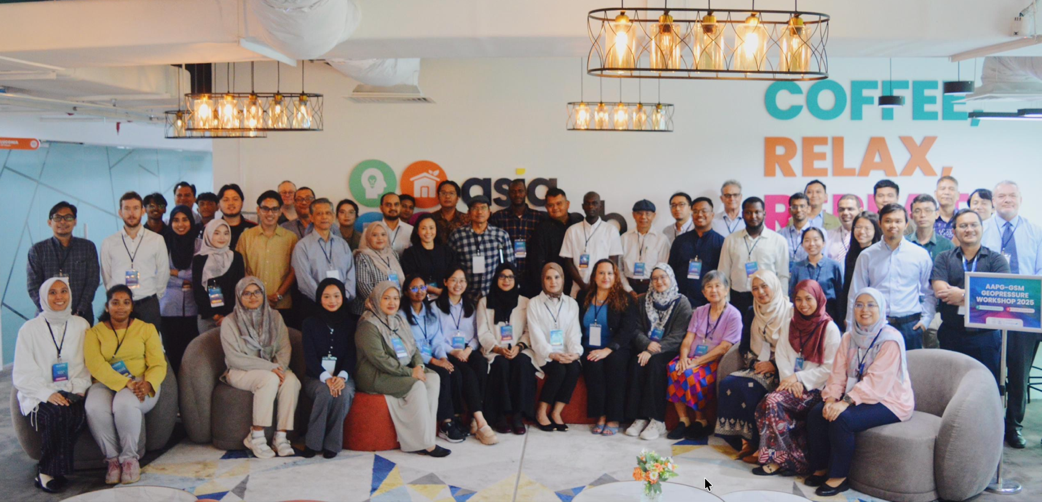
  • UBO Technical staff participated in the ‘Geo-Pressure Workshop 2025’ organized

    UBO Technical staff participated in the ‘Geo-Pressure Workshop 2025’ organized

    by AAPG-Geological Society Malaysia. Kuala Lumpur, June 2025,

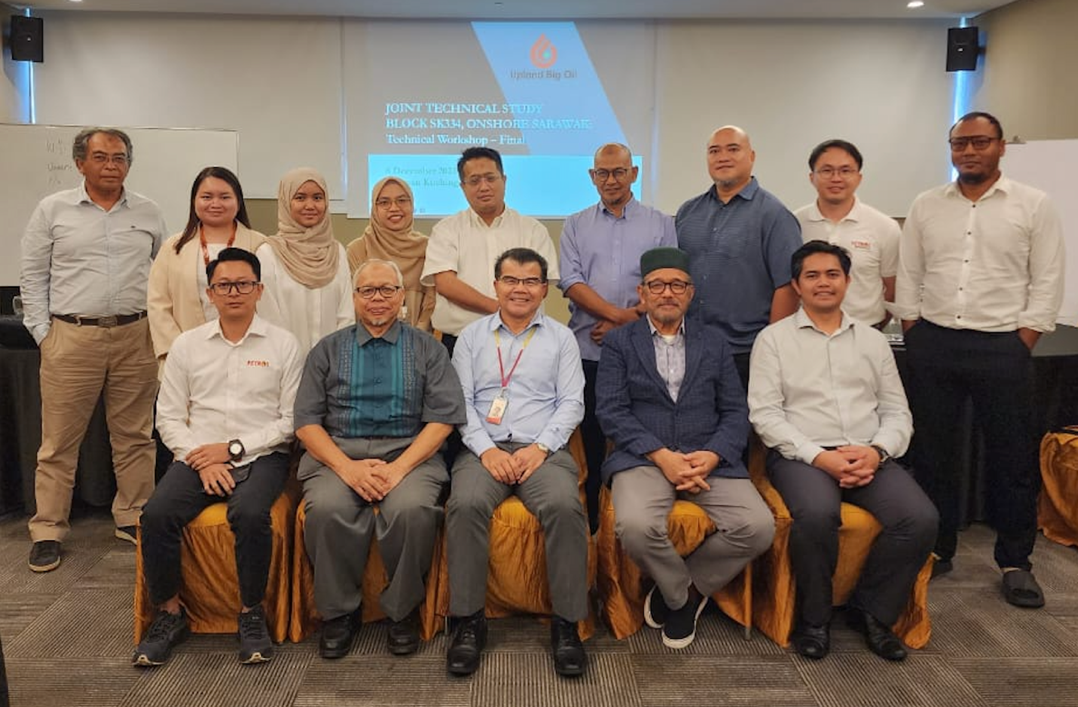
  • Upland Big Oil-PETROS concluding the ‘Joint Technical Study Block SK334,

    Upland Big Oil-PETROS concluding the ‘Joint Technical Study Block SK334,

    Onshore Sarawak’ Technical Workshop-Final, Dec 2023 Kuching Sarawak.